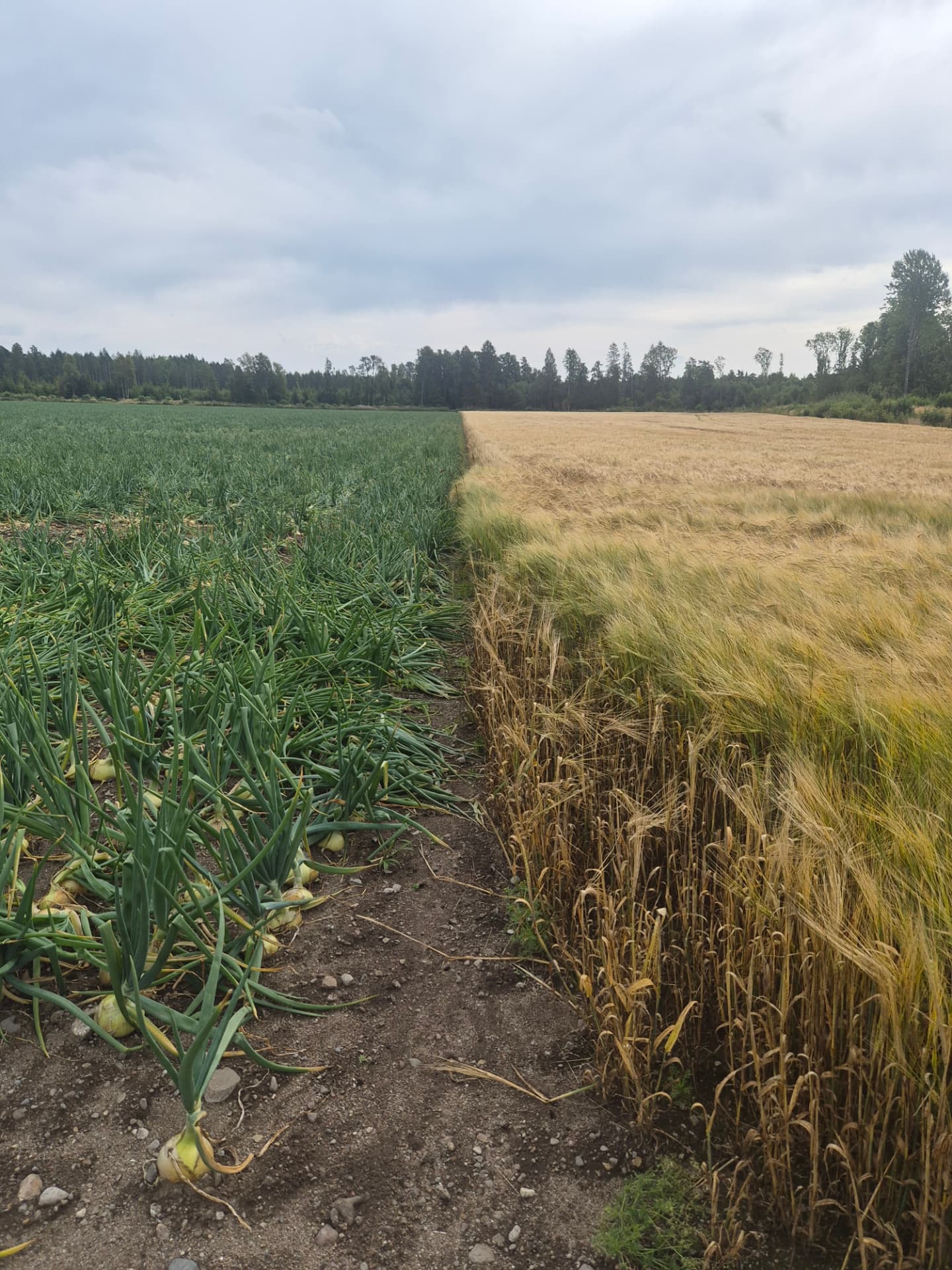
For most of the year, a field is a work in progress. There's planting, fertilizing, irrigation, weather to worry about and a lot of machinery and manpower involved. Then, within a relatively short period, all of that work turns into an enormous amount of actual food.
The onion field in the picture is a good example. Standing next to it, we started wondering what it was actually worth.
Using a very rough estimate based on the size of the field, typical onion yields and current supermarket prices, we ended up somewhere in the region of $1 million in potential retail value.
It's obviously not what the farmer gets paid, and not every onion ends up being sold at full retail price. But that's not really the point. It gives you an idea of the amount of value that can be sitting in what, from the road, just looks like another field.
And onions are relatively robust. The same principle becomes even more interesting when you look at tomatoes, berries, lettuce and other produce with much shorter shelf lives.
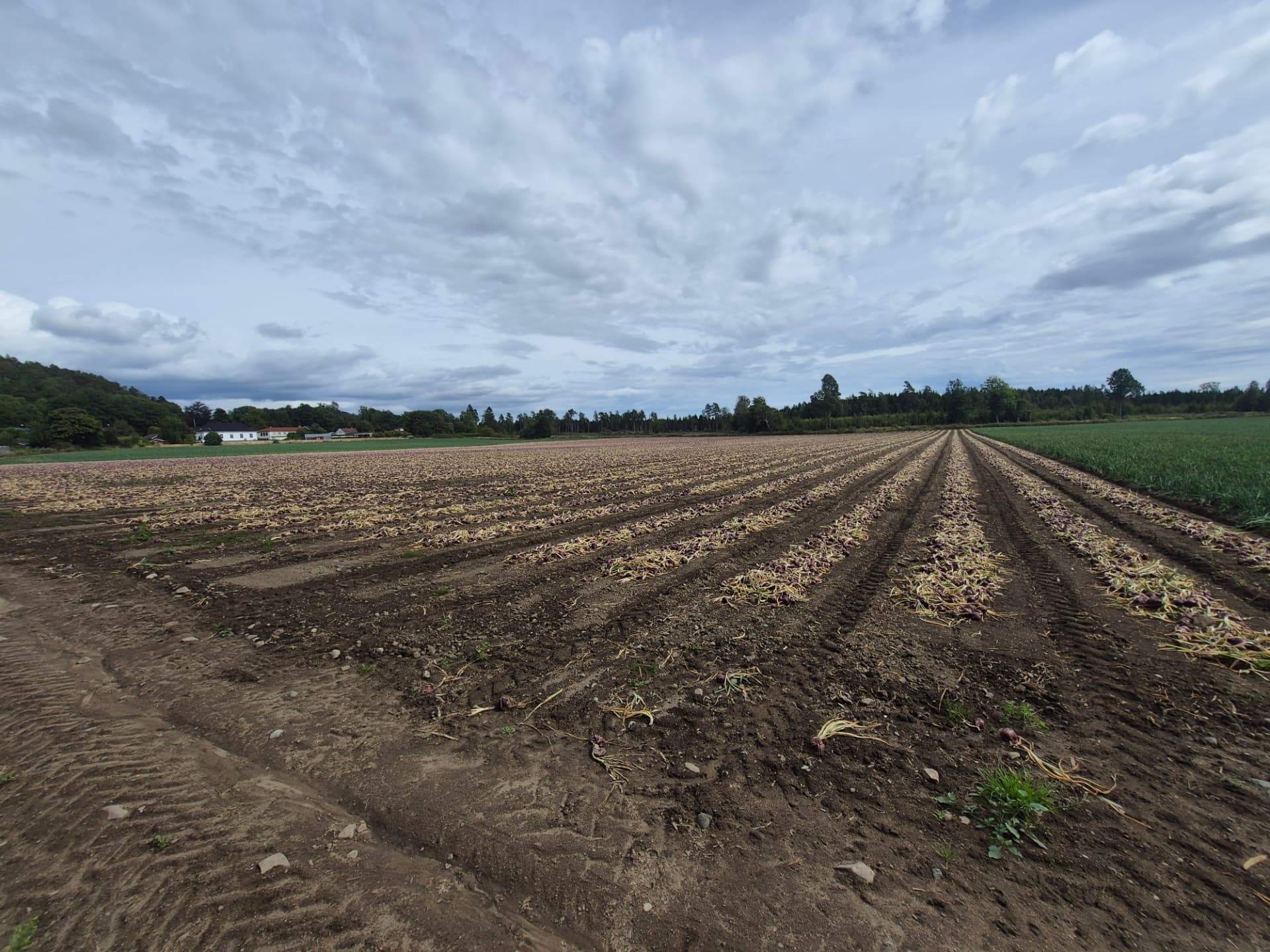
The supply chain starts long before the truck
Working with logistics, we naturally spend a lot of time thinking about what happens after products are loaded onto a vehicle. But being this close to where food is actually grown is a useful reminder that the logistics journey is only one part of the story.
By the time a box of tomatoes enters a truck, quite a lot has already gone right.
The crop has made it through an entire growing season. It has survived changing temperatures, rain, dry periods, pests and everything else agriculture throws at it. It has been harvested, sorted and packed.
At that point, the job changes.
The challenge is no longer to produce the food. It is to preserve as much as possible of the quality and shelf life that has already been created.
That sounds obvious, but it's an important distinction.
Harvest is really the start of a second journey
From the farm, fresh produce might go through a packing facility, cold storage, a distribution centre and several vehicles before reaching a supermarket, restaurant or home.
Temperature matters throughout that journey, but so does time.
A tomato doesn't become fresher while it sits on a loading dock. Lettuce doesn't gain shelf life during an extra night at a distribution centre. Every unnecessary hour in poor conditions uses up a little more of the product's remaining life.
That has consequences further down the chain. Shorter shelf life means more waste, more markdowns and less time for the consumer to actually use the product.
And when you stand next to a field containing hundreds of thousands of kilos of food, even very small percentages suddenly become meaningful.
A 1% improvement sounds insignificant in a PowerPoint presentation. Applied across fields, truckloads, distribution centres and stores, it can represent a remarkable amount of food.
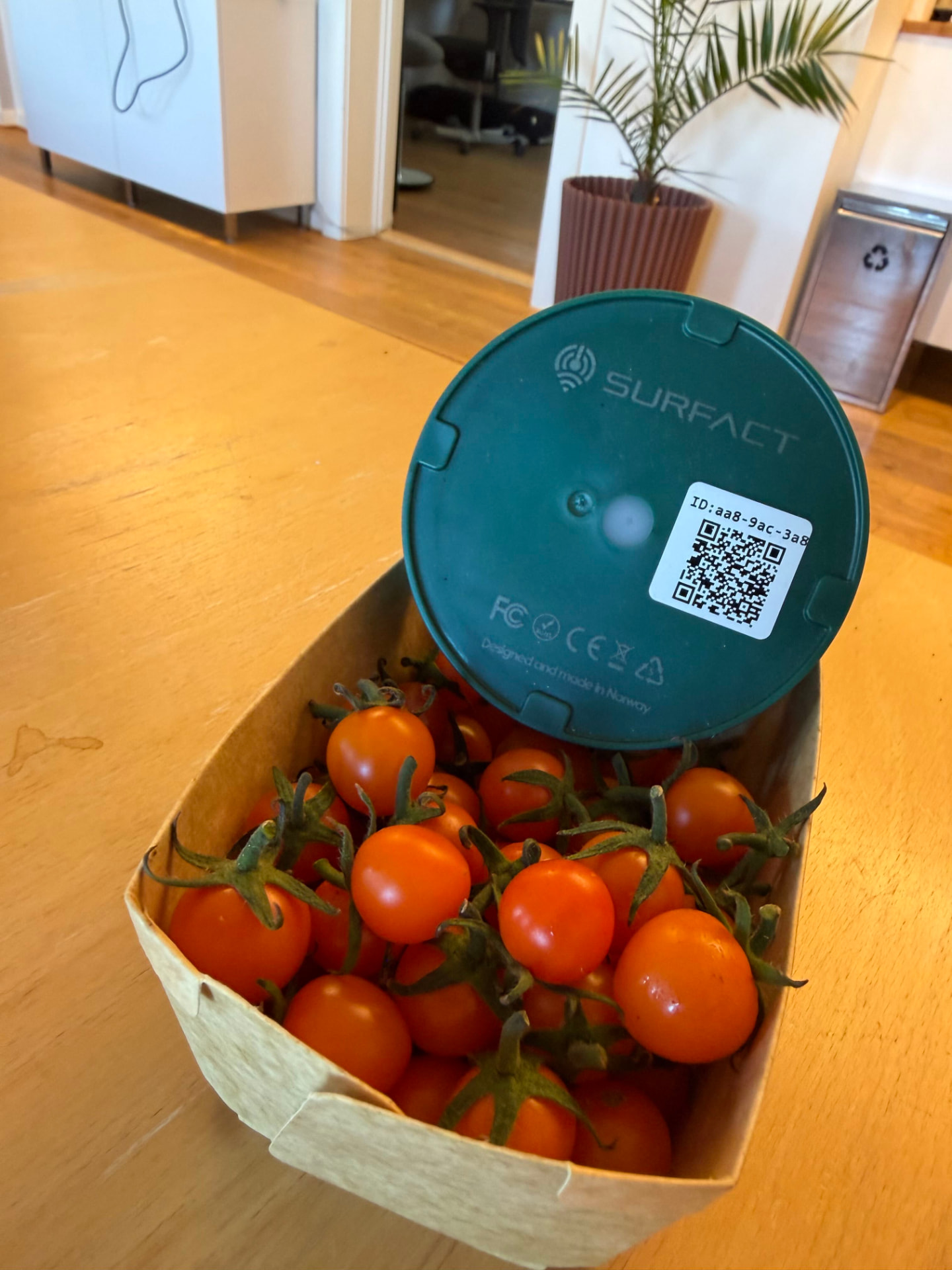
Taking care of what we've already made
There is rightly a lot of focus on producing food more efficiently. Better yields, less water, lower energy consumption and more sustainable farming practices all matter.
But there's another efficiency measure that is much simpler: take better care of what we have already produced.
Once the crop leaves the farm, we can't control the weather it experienced in June or change how it was grown. But we can control much more of what happens next.
We can know how long it has been in transit. We can understand the temperatures it has experienced. We can spot problems earlier. And increasingly, we can use that information to make better decisions about how products are handled and where they should go next.
That's a big part of what makes fresh food logistics interesting to us at Surfact.
The field is where months of work finally become food.
And from there, our job is really quite simple: don't screw it up.